
Wasting Away – The Hidden Epidemic
Sarcopenia is the latest wellness buzzword trending in the health and fitness world. Is it just another passing fitness fad, or a legitimate problem we all need to take seriously? Public interest and online search volume of “sarcopenia” have been steadily increasing. Health podcasts and social media feeds are also starting to cover this topic, making it seem like another marketing hype. But, in reality, it is actually a biological tax that almost all of us are paying unknowingly… or will eventually!
So, what is Sarcopenia?
The word itself can be broken into two Ancient Greek terms: ‘sarx’, meaning flesh or muscle; and ‘penia’, meaning poverty. Sarcopenia literally means “poverty of the flesh”. Medically, it is defined as the progressive, age-related loss of skeletal muscle mass, strength, and function. Surprisingly, this process begins far earlier than most people realise – often starting quietly in our thirties. From middle-age onwards, we start losing around 1% of muscle mass every year.

The decline accelerates drastically as we age, potentially stripping away more than 50% of our total muscle mass when we reach our eighties and nineties - (See Reference 1at the end of the article)
Sarcopenia is fast becoming a global issue. A study spanning 36 countries found that amongst those aged 50 and above, prevalence of Sarcopenia ranged from 2.1% to 17.4%, with nearly half of those countries seeing rates above 5% - (2). Closer to home, data from the UK Biobank reveals a harsh reality: about one in every 20 individuals between the ages of 40 to 70 already has Sarcopenia - (3)
The wolf in sheep’s clothing
Unlike grey hair or wrinkles, Sarcopenia stays entirely hidden in the background. Because the process is so gradual, it slowly chips away at your muscles without warning. Before you know it, you are physically ‘half the person you were’, and yet you could still look normal or be at a healthy weight from the outside. This is the danger of Sarcopenic Obesity, an unhealthy coexistence of high body fat and low skeletal muscle. And because you may still look “normal”, many remain undiagnosed. Global data shows that nearly 1 in 10 older adults are walking around with this dangerous internal combination. And gentlemen, take note: sarcopenia rates in men are higher as you have a higher baseline of muscle mass compared to women - (2,4,5) Women, however, experience a sharp accelerated loss of muscle between the ages of 40 to 60, coinciding with the menopause. Muscle loss has been measured at 2.5% around perimenopause and jumps to 5.7% after menopause - (6)
Obesity and muscle loss seem to be polar opposites, but biologically, they may form a vicious cycle. Excess fatty tissue naturally releases inflammatory signals to break down skeletal muscle, and losing muscle slows down our metabolic rate, leading to more fat gain - (7). Couple that with age-related muscle loss and you are getting kicked twice, despite being at a ‘healthy’ weight. As the saying goes, “it’s not about how you look, it’s what’s inside that matters”.
It is also what’s inside that influences our entire health profile, which is exactly why the medical world is starting to lift this issue up.
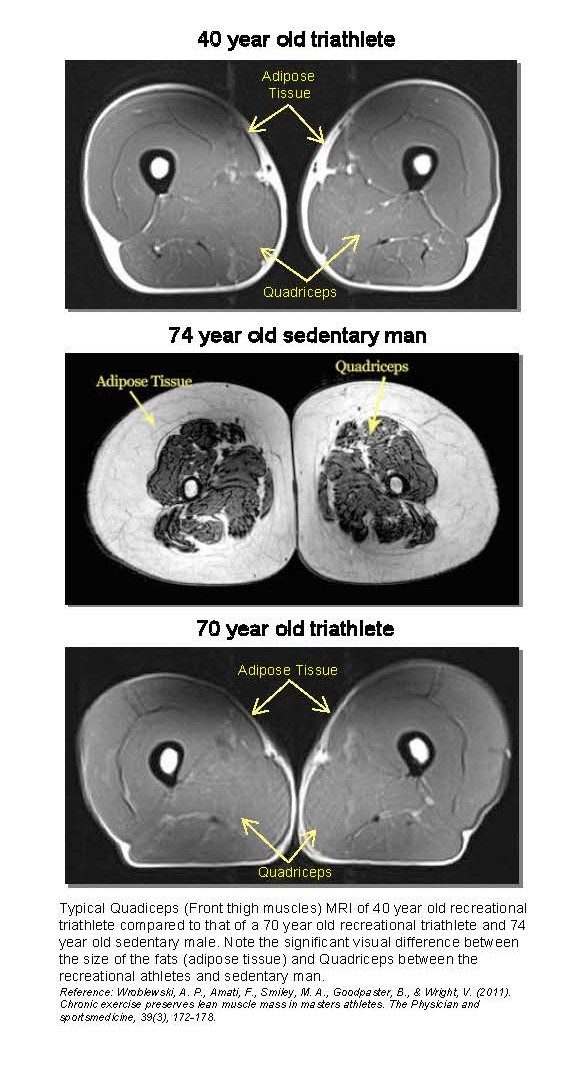
This MRI image contrasting the difference in the thigh muscle of active and sedentary people, illustrates the effects of sarcopenia. The sedentary 74 year old has a markedly higher proportion of fatty (adipose) tissue and much lower muscle mass. It also illustrates that an active 70 year old is capable of retaining a similar muscle mass to a 40 year old with the right level of exercise and diet - (17)
Falling dominoes
All this while, we have viewed muscles as mechanical pulley systems that help us move. But the latest research is starting to suggest it is more than this: muscles are our body’s largest metabolic and endocrine organ, engaging in vital “cross-talk” with other organs and systems - (7). The endocrine system is responsible for maintaining various bodily systems using a chemical messaging system. Who knew our muscles could influence the health of our bones, blood sugar, and even our brains?
The muscle pulley system works like this; our muscles connect to our bones, and using our muscles moves our bones, thereby helping us move…

…Take our biceps, for example, they connect from the top of our upper arm to our forearm, just below our elbow; contracting it allows us to move our arms. It is this very contraction of muscles that improves our bone health in two distinct ways…
Firstly, the mechanical forces exerted on our bones during muscle contraction improve bone density and cartilage integrity - (8). The physical pull of the muscles forces our body to strengthen the bone – after all, a pulley system cannot work if the anchor itself is not strong enough.
Secondly, when muscles contract, they release chemical messengers called myokines that help regulate and promote bone formation while simultaneously limiting inflammation – a double win - (8) With less muscle, our bone health would therefore be compromised, drastically increasing the risk of osteopenia or osteoporosis - (7)
When it comes to sugar, our muscles serve as an important reservoir, helping store up to 80% of glucose obtained from our foods - (9). Our body then taps into this reservoir to generate energy for our daily function. Sarcopenia effectively reduces the volume of these reservoirs. With less storage capacity, excess glucose backs up into our bloodstream. This forces our pancreas to produce more insulin in an attempt to usher the glucose into storage – but with no available storage in sight, a stalemate ensues. Over time, pancreatic function declines and blood glucose levels remain high. This creates a pro-inflammatory environment leading to more fat gain and further muscle loss, cueing the beginnings of Type II diabetes. A second UK Biobank study found that individuals with the dangerous combination of high fat and low muscle mass increase their risk of developing Type II diabetes by a massive 3.5 times - (10).
Next up, our brain. The domino effect of muscle loss can actually infiltrate our mind through what scientists have termed the Muscle-Brain Axis - (11). Myokines released from our muscles during contraction travel into our brain, prompting it to release a powerful growth chemical known as Brain-Derived Neurotrophic Factor (BDNF). The presence of BDNF is like a super-food for both the brain and muscle. In the brain, it encourages the growth of new nerves, helps remove unhealthy protein build-up, promotes learning and memory recall, and lowers brain inflammation. BDNF also helps to maintain a strong communication signal between our brain and muscles, which is exactly how we turn our thoughts into actions. Now imagine what would happen if we are not producing enough myokines.
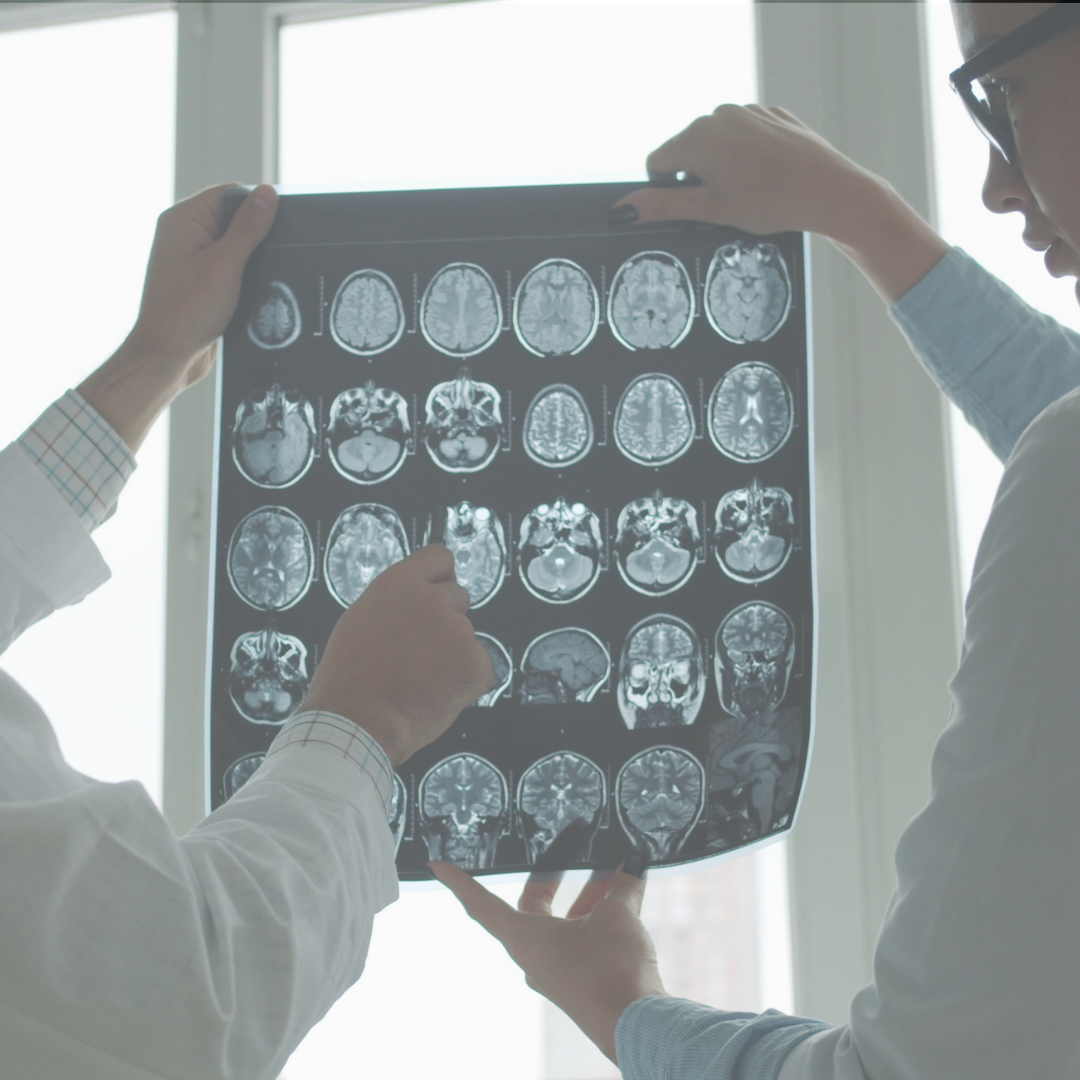
A 2026 review of the existing research on this topic found that individuals with decreased muscle mass face more than double the risk of developing brain disorders like cognitive decline, dementia, and severe depression - (12).
When we pool all these together, sarcopenia seems like a one-way ticket to a poor quality of life - (5,8,12). Losing muscle means you move less and may no longer be physically capable of doing things as easily as you once could. The fear of losing your balance and falling becomes a daily worry. Couple that with declining bone health and the cost of falls becomes much higher, making “moving less” feel like a safer alternative. Add on the elevated risk of diabetes and brain disorders, and your independence, along with your ability to perform daily tasks, will slowly be eroded.
Turning the Tide
While the domino effect of sarcopenia sounds grim, all hope is not lost. Although you cannot change the passage of time, muscle wastage need not be an inevitable life sentence. Instead, your muscles can be an ever-changing asset that you can actively rebuild and defend, regardless of age - (13).
To understand how to protect yourself, think of your muscles like brick walls. To build them, you need two crucial elements: the bricklayers and the bricks.
The bricklayer is exercise. And bad news for casual walkers, occasional lunchtime or weekend walks just will not cut it. This is because you have to send a strong, clear message to your body that your muscles are still required. The absolute gold standard for this is progressive resistance exercise - (7,8,9,11,12,13). This means moving your body against an external force that tests your muscles over time – simply put, it should feel challenging rather than a walk in the park.
Many of you would be pleased to know that resistance exercise does not necessarily mean trips to a gym for a tough and complicated workout. The American College of Sports Medicine (ACSM) reviewed more than 100 scientific studies, encompassing at least 30,000 participants and earlier this year, updated their stance on resistance exercise to a simple line: consistency beats complexity - (14).
The guidelines emphasise that the most meaningful gains occur simply when an individual shifts from zero resistance to some resistance exercise. Furthermore, the resistance could come from anything – resistance bands, gym machines, your own bodyweight, water bottles, or even a can of beans! And incorporating full-body exercises twice a week for 45-60 minutes will be enough to get the bricklayers fired up.
If time is tight, fret not; swapping out full-body exercises for targeted muscle groups (i.e. upper and lower body) in 30-minute workouts across three days is a highly efficient way to get the same benefits.
Once your bricklayers are raring to go, you have to supply them the bricks to begin work, and this is where proper protein intake comes into the equation. Protein obtained from our diet forms the literal building blocks of muscles, much like how bricks are needed to build a wall. However, an ageing body develops a biological hurdle known as anabolic resistance, whereby the body becomes less efficient in sensing protein levels and therefore requires much higher protein levels to initiate the muscle building process - (15). Using our analogy, the bricklayers in a younger body happily work the moment a few bricks come in while the same bricklayers in an ageing body would only begin working once a bigger pile of bricks is available.
A 2025 study compared regular protein intake (0.8 grams/kilogram of body weight/day) versus high protein intake (1.2 grams/kilogram of body weight/day) in women aged 60 to 75 with sarcopenia - (15). Their results showed that a higher protein intake resulted in significant improvements in strength and muscle composition – especially of the thigh and calf muscles, which are vital for basic daily functioning like walking, standing, and balance. In addition, reductions in waist circumference and body fat mass were observed. Assuming you are already consuming the baseline daily protein intake, increasing it by approximately 50% would not only help you preserve muscle mass, but also improve it, whilst making you slimmer as well – wins everywhere!
Both the bricklayers and bricks are required to help you defend against sarcopenia, and you cannot have one without the other. Remember: you cannot exercise your way out of a bad diet; nor can you eat your way out of a lack of exercise.
To conclude
Sarcopenia may be the health world’s newest buzzword, but the reality beneath the hype couldn't be more serious. Globally, we are all living longer. In the UK, life expectancy for men sits at 79.5 years, and at 83 years for women - (16). However, men spend about 18.6 of those years (23%) in poor health; for women, it is about 22 years (26%). So what is the point of having longevity if our healthspan lags behind it?
Our muscles aren’t just for looking good – they are the scaffolding of our body that supports independence, metabolic health, and healthy longevity. The natural trajectory of ageing is a slow, quiet process of wasting away, but it doesn't have to be your trajectory. Remember, we are all paying this biological tax, so why not invest in your future self? By exercising, prioritising protein, and treating your muscles as a lifelong health savings account, you can stop the drain.

Don't let your strength waste away. Build it up, protect it, and claim the strong, vibrant health span your body is capable of!
If you, or someone you care about, would like to find out how Chiropractic could help with getting you mobile and pain free enough to keep your body active and strong as you age, you can speak to one of our friendly reception team about appointment options on 01328854325
References
1. Wilkinson, D. J., Piasecki, M., & Atherton, P. J. (2018). The age-related loss of skeletal muscle mass and function: Measurement and physiology of muscle fibre atrophy and muscle fibre loss in humans. Ageing research reviews, 47, 123–132.
2. Huang, S., Lai, W., Flood, D., Wei, Y., Zheng, Y., Liu, Q., ... & Li, C. (2026). Prevalence of sarcopenia and individual-and country-level risk factors in 36 countries: pooled analysis of nationally representative individual data. Age and Ageing, 55(7), afag210.
3. Dodds, R. M., Granic, A., Robinson, S. M., & Sayer, A. A. (2020). Sarcopenia, long-term conditions, and multimorbidity: findings from UK Biobank participants. Journal of cachexia, sarcopenia and muscle, 11(1), 62–68.
4. Khalilizad, M., Sharifzadeh, Y., Rangani, A., & Rezazadeh Sarabi Javid, S. (2026). Global prevalence of, and factors associated with, sarcopenic and osteosarcopenic obesity in the community older adults: a systematic review and meta-analysis. BMC Geriatrics.
5. Roh, E., & Choi, K. M. (2020). Health consequences of sarcopenic obesity: a narrative review. Frontiers in endocrinology, 11, 332.
6. Menzies, C., Bowtell, R., Shur, N., & Brook, M. S. (2026). Menopause, female sex hormones, skeletal muscle mass and muscle protein turnover in humans. Journal of Cachexia, Sarcopenia and Muscle, 17(1), e70232.
7. Hunter, G. R., Singh, H., Carter, S. J., Bryan, D. R., & Fisher, G. (2019). Sarcopenia and its implications for metabolic health. Journal of obesity, 2019(1), 8031705.
8. DeFoor, M. T., Philippon, M. J., Engebretsen, L., & Huard, J. (2026). Cornerstone of healthy ageing: preserving skeletal muscle to delay age-related musculoskeletal disease and maintain functional independence. British Journal of Sports Medicine.
9. Harper, M. E., Dent, R. R., & McPherson, R. (2025). High-quality weight loss in obesity: importance of skeletal muscle. Diabetes, 74(12), 2191-2198.
10. Guan, Z., Stephan, B. C., & Siervo, M. (2026). Sarcopenic Obesity and Risk of Incident Type 2 Diabetes: A Prospective Cohort Study and Landmark Analysis From the UK Biobank. Diabetes Care, dc260797.
11. Arosio, B., Calvani, R., Ferri, E., Coelho-Junior, H. J., Carandina, A., Campanelli, F., ... & Picca, A. (2023). Sarcopenia and cognitive decline in older adults: targeting the muscle–brain axis. Nutrients, 15(8), 1853.
12. Güngör, M., & Balcı, C. (2026). Sarcopenia in older adults: A narrative review of current concepts in diagnosis and treatment. Clinical Nutrition ESPEN, 103276.
13. Evans, W. (1997). Functional and metabolic consequences of sarcopenia. The Journal of nutrition, 127(5), 998S-1003S.
14. Triplett, N. T. (2026). Resistance Training Prescription for Muscle Function, Hypertrophy, and Physical Performance in Healthy Adults: An Overview of Reviews. ACSM'S Health & Fitness Journal, 30(5), 60-61.
15. Ishaq, I., Noreen, S., Maduabuchi Aja, P., & Atoki, A. V. (2025). Role of protein intake in maintaining muscle mass composition among elderly females suffering from sarcopenia. Frontiers in nutrition, 12, 1547325.
16. Raleigh, V. (2026, July 27). What is happening to life expectancy in England? The King's Fund. https://www.kingsfund.org.uk/insight-and-analysis/long-reads/whats-happening-life-expectancy-england
17. Wroblewski, A.P., Amati, F., Smiley, M.A.,Goodpater, B., & Wright V. (2011). Chronic exercise preserves lean muscle mass in master’s athletes. The Physician & Sports Medicine, 39 (3) I72, 173